Scan the source
Read selected Plex, Jellyfin, or Emby libraries once and normalize watch state for every profile in the batch.
Current release v0.1.1Open source
Your library stays the source of truth.
Self-hosted media synchronization that keeps Plex, Jellyfin, or Emby watch state aligned with the tracking services you already use.
Runs in DockerSelf-hosted, no cloud accountDry run before every write
Plex, Jellyfin, and Emby are supported sources.Profiles decide which libraries feed each target.
Compare provider capabilitiesOne synchronization layer
Brokerr reads selected Plex, Jellyfin, or Emby libraries, maps each title to the right provider item, and plans only the changes supported by that target.
AniList, MyAnimeList, TMDB, SIMKL, Trakt, and Letterboxd have different status and progress models. Brokerr exposes those differences instead of pretending every service behaves the same.
How it works
Read selected Plex, Jellyfin, or Emby libraries once and normalize watch state for every profile in the batch.
Use direct provider IDs, manual overrides, and AniBridge as an anime-only mapping fallback.
Compare source and target state, apply profile rules, and expose every proposed change for review.
Run independent provider lanes with pacing, retries, conflict detection, and an inspectable audit trail.
Built for real sync workflows
Connect selected source libraries to a target account with capability-aware rules and schedule opt-outs.
Run full, incremental, webhook, manual, and scheduled synchronization without changing the profile model.
Share source reads, serialize operations for the same provider type, and run different providers in parallel.
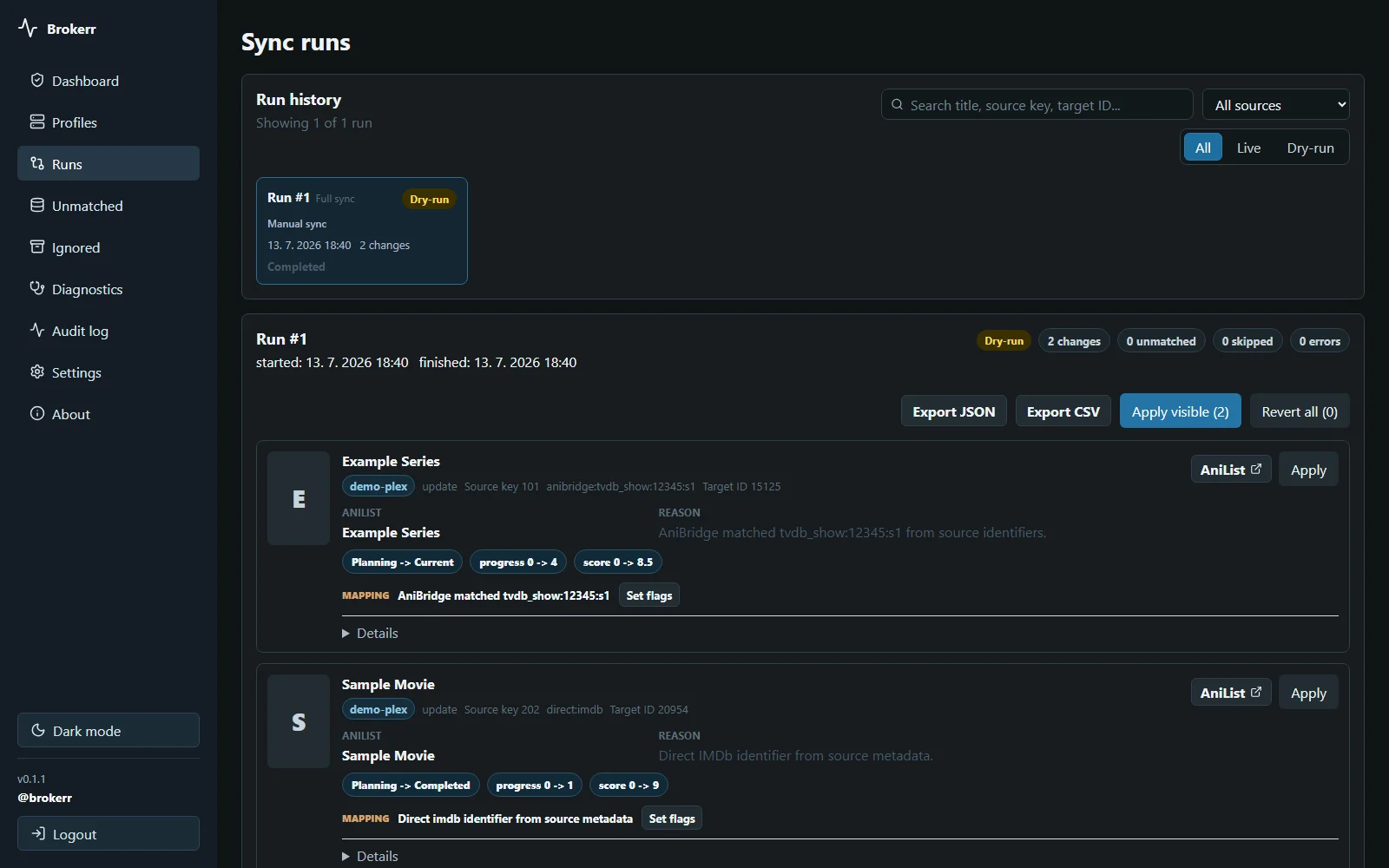
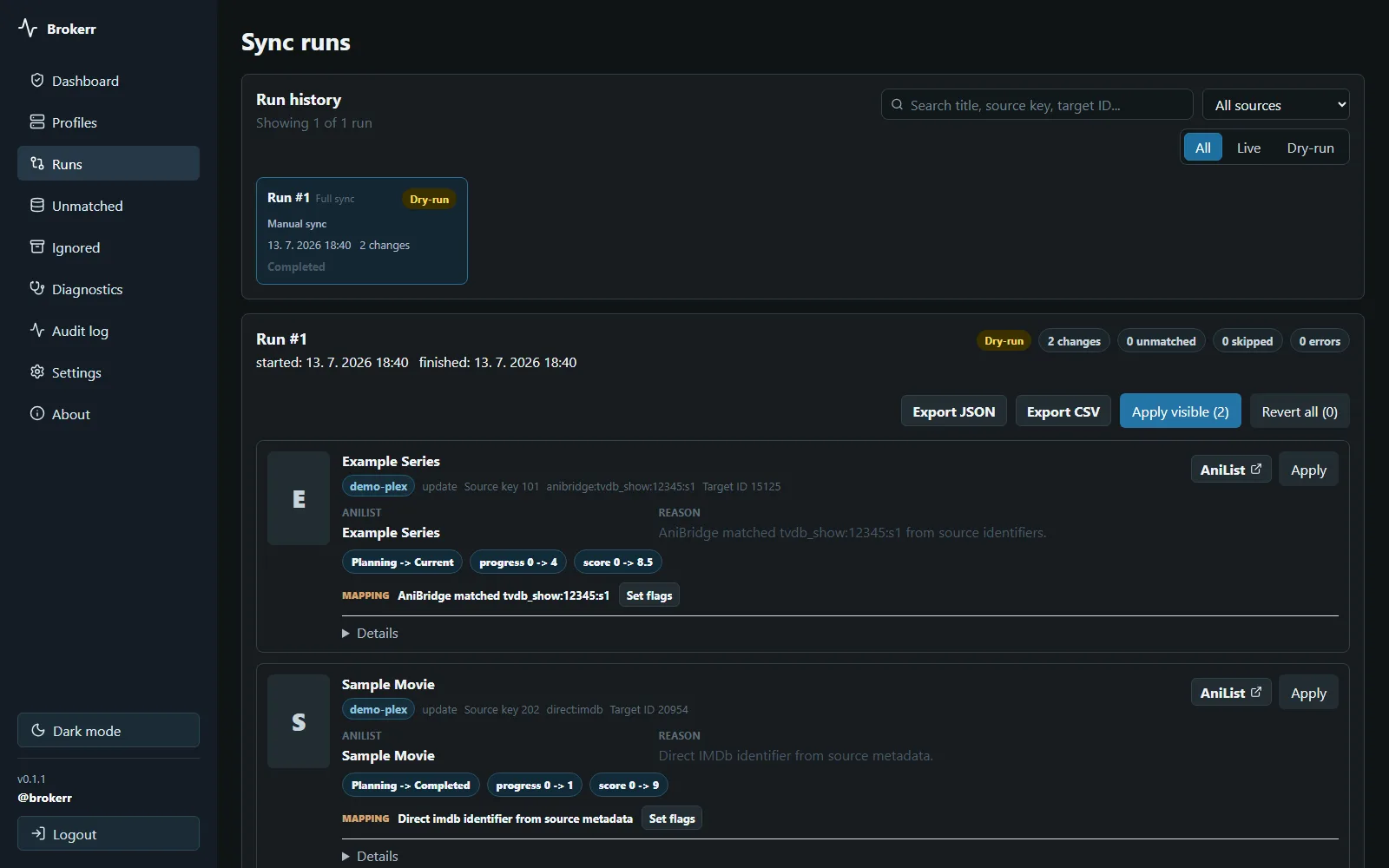
Use dry runs, detailed diffs, mapping context, apply/revert controls, exports, and persistent run history.
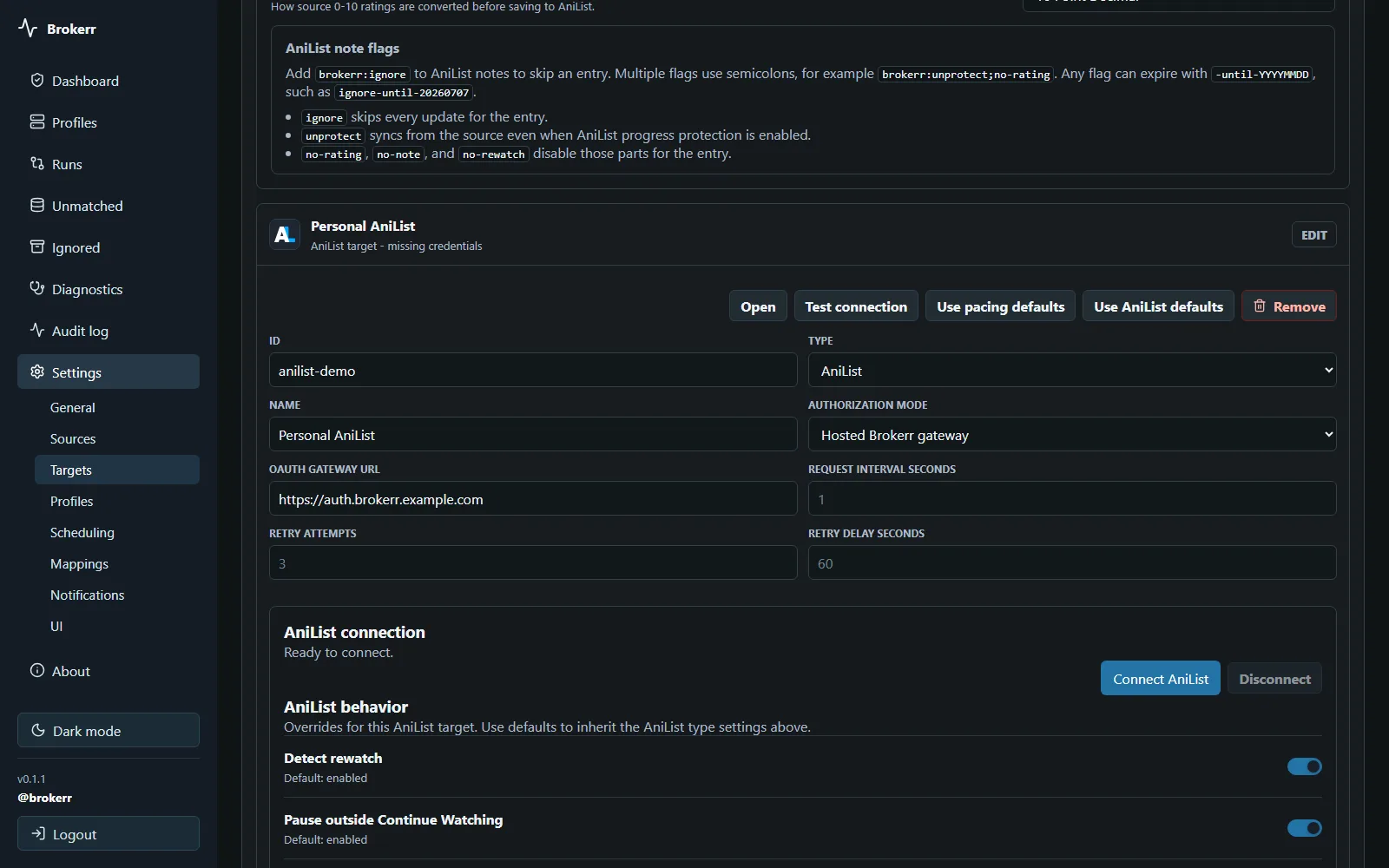
Choose the hosted Brokerr OAuth gateway or use your own provider application credentials per target.
Inspect diagnostics, bounded request telemetry, audit events, provider health, and Discord notifications.
Rules remain visible
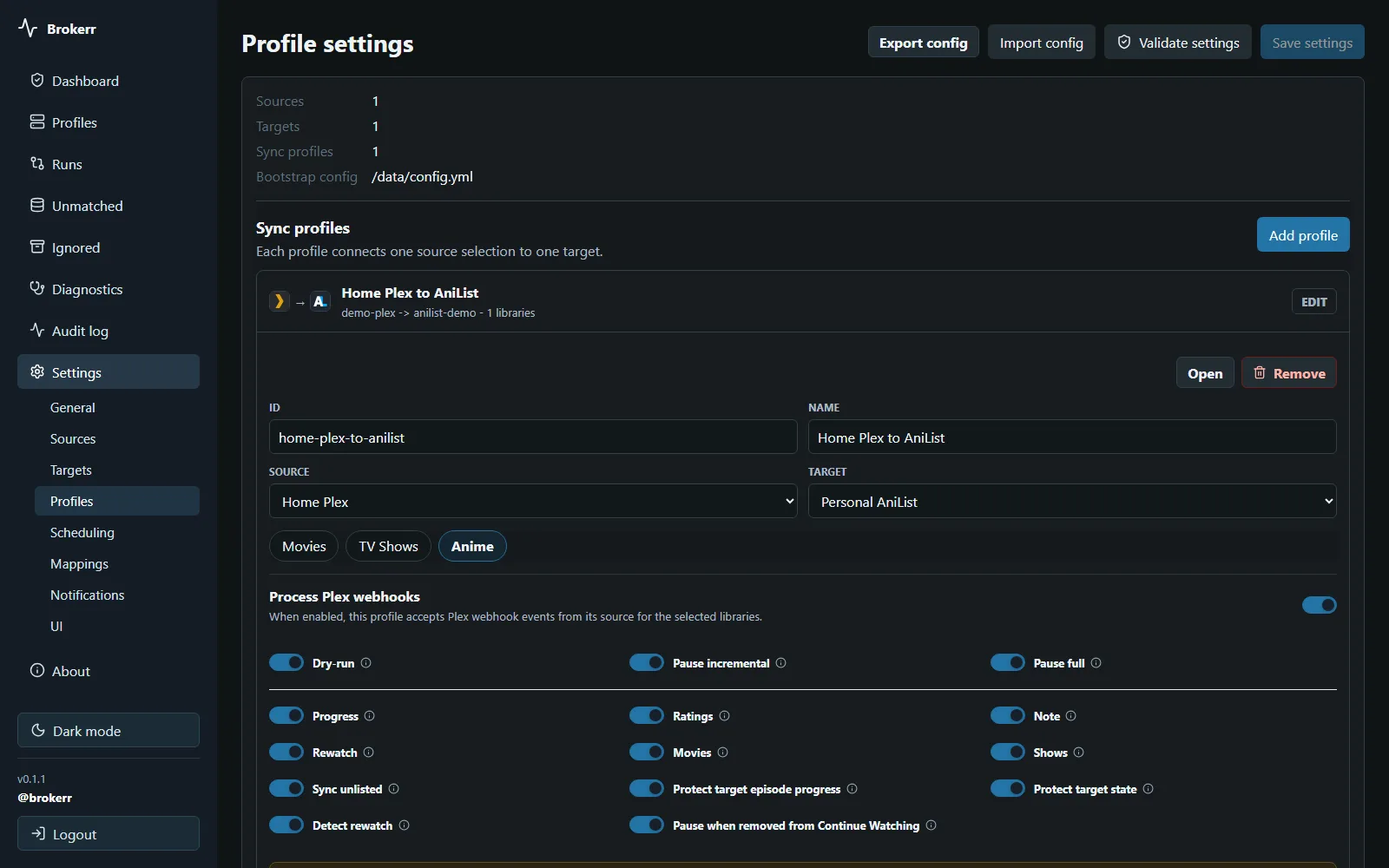
Select libraries, choose scheduling behavior, and enable only rules supported by the connected target. Contextual guidance explains interactions before they become surprising writes.
Review before writing
Inspect target state, planned updates, mapping decisions, unmatched items, and errors. Apply an individual entry or the visible result only after the preview makes sense.
Integrations
Plex, Jellyfin, and Emby provide source state. Target capabilities vary by service, and Discord can deliver filtered run notifications.
Read watch state
 Plex
Plex Jellyfin
 Emby
EmbyReceive synchronized state
 AniList
 My Anime List
 TMDB
TMDB SIMKL
SIMKL Trakt
Trakt Letterboxd
Self-hosted and private
Runtime configuration lives in SQLite. Recoverable credentials use AES-256-GCM encryption under your master key, while passwords remain one-way hashed. When you choose hosted OAuth, the gateway handles the authorization result only long enough to deliver it to your instance.
Start with a dry run
Bring up Brokerr with Docker, connect one source and one target, and inspect the first diff before anything is written.
No Brokerr cloud account required. Data is sent only to the sources, targets, notifications, and optional OAuth gateway you configure.